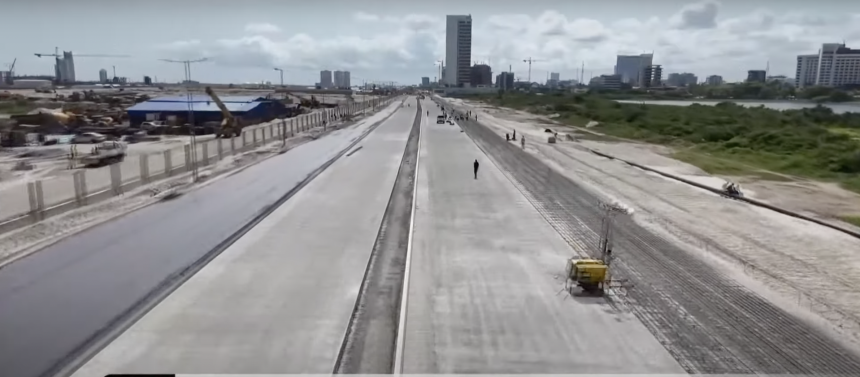
FG bans shanties, truck parking, okada, hawking on Lagos-Calabar Coastal Road
The Federal Government has declared a ban on illegal occupation, shanties, truck parking, illegal U-turns, hawking, animal grazing, motorcycles and tricycles along the Lagos-Calabar Coastal Highway, as it moves to restore order and improve safety on the newly opened road.
The Federal Controller of Works in Lagos State, Engr Olufemi Dare, announced the restrictions during a press briefing on the coastal highway, warning that the government would no longer tolerate activities that endanger motorists, obstruct traffic or threaten the integrity of the road infrastructure.
Dare said the measures became necessary following persistent violations along the highway, including the use of the road by articulated vehicles as parking areas, the creation of illegal U-turns and the emergence of shanties and illegal settlements.
He specifically warned truck owners and drivers against parking on the highway, saying any articulated vehicle found parked along the route would be clamped and towed away.
According to him, the government has also banned motorcycles, popularly known as Okada, and tricycles, including Keke Marwa, from operating on the coastal highway.
“No Okada, is completely banned. No Keke Marwa, is completely banned. Tricycle, all manner of tricycles, they are banned on the coastal highway,” he said.
The Federal Controller also declared a crackdown on illegal U-turns created by road users and what he described as hoodlums operating along the highway.
He warned that those arrested for creating or using such illegal U-turns would be prosecuted.
Dare extended the ban to hawking and roadside trading, saying traders had already begun occupying portions of the highway, particularly around kilometre 18.
He also warned against the grazing of animals on the road, saying livestock crossing the highway could cause crashes and endanger motorists.
“Grazing of animals is banned,” he declared, warning that persons caught violating the directive would face enforcement action.
The government also moved against illegal occupants and shanties along the highway, with Dare identifying areas such as Marwa as having a concentration of illegal structures.
He said security agencies would work together to clear the illegal settlements, which he described as potential hideouts for criminals.
The latest restrictions are part of a wider enforcement drive triggered by growing safety and security concerns on the coastal road.
Dare said the Lagos State Commissioner of Police, CP Fatai Oladipo, had briefed Divisional Police Officers along the highway and promised increased police deployment to enforce the new measures.
He disclosed that more than 100 Okadas had been impounded along the highway in the previous week.
The Federal Government also plans to deploy 40 coastal guards along the first section of the road, with the guards expected to work directly with the police and communities to monitor activities along the highway.
Dare said the government was also concerned about the vandalisation of road infrastructure, including clear-view fencing, directional signs and manhole covers.
He disclosed that about five kilometres of clear-view fencing had been removed, while manhole covers covering an estimated 18-kilometre stretch had been stolen.
ALSO READ: 37 miners’ deaths: CSOs fault calls for NSCDC CG Audi’s sack
He said the government was considering replacing some clear-view fences with blockwork and installing CCTV cameras to strengthen surveillance.
The Federal Controller further warned motorists against speeding on the highway, saying the approved speed limit was 30 kilometres per hour because construction, including major bridge works, was still ongoing.
He said motorists had been observed travelling at speeds of up to 100km/h and 120km/h despite the restrictions.
Dare said the Federal Government had given road users two weeks to comply with the regulations, warning that failure to improve the situation could lead to the closure of the coastal highway.
He said Dave Umahi had directed that the road could be shut if the violations persisted, stressing that the government could not continue to expose lives and infrastructure to avoidable risks.