
News
Ondo AG Ajulo grants exclusive interview, speaks on brighter sides of Tinubu’s reforms, Nnamdi Kanu, Aiyedatiwa’s initiatives, ADC, and more

Published
3 months agoon
By
Admin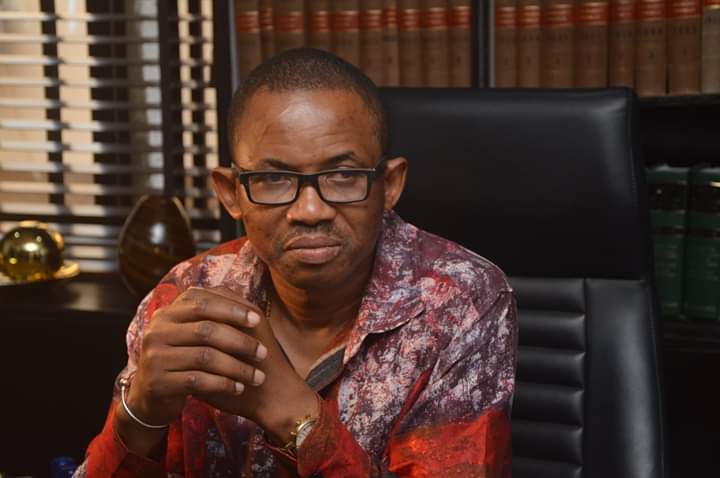
Ondo AG Ajulo grants exclusive interview, speaks on brighter sides of Tinubu’s reforms, Nnamdi Kanu, Aiyedatiwa’s initiatives, ADC, and more
The Attorney General and Commissioner for Justice, Ondo State, Dr Olukayode Ajulo (SAN), in this interview speaks on different issues, including the gale of defections into the All Progressives Congress (APC), the jailed leader of Indigenous People of Biafra (IPOB), Nnamdi Kanu, among others. Excerpts:
How would you describe the recent appointments made by the President?
I appreciate the complexity of the political dimensions surrounding this question, but I would like to focus on the legal aspects of it. We must adhere to the Constitution of the Federal Republic of Nigeria (1999) as amended. The President operates under the authority granted to him by the Nigerian electorate, which we call a mandate here, and his power to make appointments is outlined in Section 171 of the Constitution.
Furthermore, the federal character principle in Section 14(3) mandates that appointments reflect the diversity of our nation. The list presented shows the states of origin of the nominees, and it’s evenly distributed among the states which indicates compliance with this constitutional requirement.
The President’s constitutional duty is simply to nominate; the Senate, representing the Nigerian people in their various senatorial districts, retains the power of confirmation under Section 147(2). If the Senate finds a nominee unsuitable, they decline confirmation and the President may present another name. Legally speaking, therefore, the process followed is impeccable. One must commend the Attorney-General of the Federation and all those who assisted the President, including the Minister of Foreign Affairs, for the diligence applied.
Some believe that some names should not have appeared on the list…
This touches on political matters, which I prefer to steer clear of. However, if we must engage the logic of such concerns, we must also admit that virtually every Nigerian would wish to see his or her name on an ambassadorial list. Even you, in this interview, might find such an opportunity appealing. What truly matters is that those included are genuine citizens of Nigeria, many of whom have demonstrated a strong commitment and dedication to the nation’s progress.
Take, for instance, Senator Jimoh Ibrahim, former aviation minister Femi Fani-Kayode, Aminu Dalhatu, Senator Folashade Bent, Ita Enang, Reno Omokri, Chukwu Okocha and others on the list. You may disagree with their politics, but you cannot deny their visible engagement with national issues and their passion for Nigeria’s development. From that standpoint, I believe they will serve the country well.
Would it be true to say that the appointment is a preparation for the 2027 elections?
Let’s approach this matter with the seriousness it deserves. For nearly two years, the country has been without a complete set of ambassadors, which is unusual for a nation that needs to actively engage in foreign relations and diplomacy. To receive the long-awaited list and quickly shift the focus to the 2027 elections feels, to me, like an unfortunate diminishment of an important constitutional process.
It has become a daily thing for the opposition to cross into the APC. Would it be correct to say that Nigeria is moving towards a one-party state?
Again, I will prefer to look at it strictly through a legal lens. The Nigerian Constitution does not permit a one-party state. Section 40 guarantees freedom of association, including the right to form or join political parties. Furthermore, the Electoral Act reinforces a multiparty system. So, structurally, legally, and constitutionally, Nigeria cannot become a one-party state.
What you see is political realignment. PDP once had five governors defect during the former President Goodluck Jonathan era, as the incumbent President. It happens everywhere. People naturally gravitate toward where their political interests, ideals, or comfort lie. Even you would prefer to be where you feel secure and less stressed. That is politics. But it does not translate to Nigeria becoming a one-party state.
What would you describe as the main attraction to the APC, most especially, when some are complaining about “hunger in the land”?
The attraction is partly what I earlier described, political alignment and comfort. But let me address this talk about “hunger in the land.” Hunger is as old as humanity. From the beginning of human history, poverty and deprivation have existed. No government, no matter how powerful, can eliminate them completely. The role of a responsible government is to reduce poverty and mitigate hunger to the barest minimum.
Section 16(2)(c) of the Constitution places the welfare of the people at the core of governance. That is the real measurement: not whether hunger exists, but to what extent the government is reducing it and whether the numbers are improving. It is about data, percentages, and measurable progress, not emotions.
Would you say the government has done enough to cushion the effects of change in his policies, especially the removal of subsidy?
Firstly, by removing the fuel subsidy, the government has freed up substantial fiscal space. The government has indeed taken broad and deliberate steps to cushion the impact of its major policy shifts, especially the removal of fuel subsidy. Beyond the immediate decision, the administration has tried to redirect the fiscal space created by the reform into programmes that directly touch citizens. Official disclosures indicate that over a trillion naira has been saved since the subsidy was removed, and these funds have been channelled into areas considered more productive for national growth. A significant portion of these resources has gone into palliative measures, with the federal government setting aside trillions for targeted interventions aimed at households, students, businesses and critical sectors of the economy.
One of the standout decisions is the introduction of the Student Loan Scheme under NELFUND, which is intended to ensure that economic pressure does not force young people out of school. At the same time, small businesses, artisans and informal sector operators have been given access to grants and single-digit interest credit facilities designed to help them stay afloat during the transition period. In the transport sector, the Presidential Compressed Natural Gas Initiative is being pushed to reduce dependence on petrol and diesel, lower transport costs and indirectly ease inflationary pressure on citizens.
In agriculture, the federal government has made fresh investments to boost the production of staple crops and stabilise food supply. To support direct household relief, each state, including the FCT, received a palliative package to procure essential items for vulnerable families. Alongside these cushioning measures, the administration is undertaking broad fiscal and structural reforms that it says are necessary to stabilise the economy, curb waste, block leakages and redirect public resources to more impactful areas such as infrastructure, social welfare and education.
These combined actions reflect the government’s intention to reduce the short-term hardship caused by subsidy removal, while also positioning the economy for long-term stability and growth.
What are those positive things the removal of subsidy have done to an average Nigerian?
Subsidy removal, though painful initially, has long-term national benefits. It has curbed massive leakages that enriched a few at the expense of the many. Funds previously squandered on opaque subsidy regimes are now being redirected into infrastructure, social investment programmes, education funding through the student loan scheme, and other tangible areas.
It has also encouraged more realistic pricing, fostering competition and attracting investment into the energy sector. Over time, these reforms will lead to improved services, better energy availability, and a healthier economy—benefits that ultimately trickle down to the ordinary Nigerian.
If you were to be the Attorney-General of the Federation, what would you be telling the federal government about Nnamdi Kanu’s case?
First, I must commend the Attorney-General of the Federation and Minister of Justice, who incidentally is one of my mentors. I have learnt tremendously from him, and I continue to learn. He has provided sound legal guidance to the government.
Regarding Nnamdi Kanu, the legal process has been followed meticulously. He was given every opportunity to defend himself. The court accorded him all his rights, adjourned when necessary, and ensured fairness. Even in convicting him, the court showed measured leniency. As a believer in the rule of law, I maintain that the law must take its course, even if heaven seems poised to fall. And as I often say, heaven will not fall, because we have the institutions, constitutional frameworks, and citizens—lawyers, press, and others, to hold it up from falling on us.
Many have argued that we have agitations because federalism has taken power from the regions. What is your take on this?
I have said this many times: I am yet to see any President who has silently but strategically restructured Nigeria as much as President Bola Ahmed Tinubu is currently doing. His reforms represent a quiet, peaceful, and pragmatic restructuring.
People will always agitate. Years ago, some demanded federalism; today others demand regionalism. This shows that human expectations are dynamic. What matters is that the current restructuring is systematic, balanced, and devoid of chaos. As a public official myself, I receive countless complaints, many real, some imagined, but governance requires wisdom, patience, and the ability to manage diverse expectations.
What are those things that have changed since Governor Aiyedatiwa assumed office?
Over a thousand things. If I begin with just the Ministry of Justice alone, one out of over a hundred MDAs in Ondo State, we would not leave here today. However, let me say a few things.
Across Ondo State, Governor Aiyedatiwa’s tenure has indeed witnessed significant, visible progress, and nowhere is this more striking than in the transformation of the justice system under my leadership at the Ministry of Justice and the Judiciary.
Early in the administration of Governor Aiyedatiwa, he flagged off the construction of a new, state-of-the-art High Court Complex (often referred to as the “Judiciary Village”) in Akure. That project, known as the Oluwarotimi Odunayo Akeredolu Judiciary Complex, is designed to include a ceremonial court, modular courtrooms, a registry, a modern library, exhibition buildings, a utility building, and ample parking facilities, all intended to provide a befitting, modern working environment for judges, lawyers, court staff and litigants alike. This is the first time in the history of the state, since 1976, that such an ambitious infrastructure effort has been launched for the judiciary.
Complementing that infrastructural investment, Aiyedatiwa signed into law a bill that expanded the number of judges in the state judiciary from 24 to 35, thereby boosting judicial manpower for the first time since the state’s creation. As a follow-up, six new High Court judges were sworn in under this administration, a rare large-scale induction meant to ease the burden on existing benches, accelerate case adjudication, and reduce delays in justice delivery.
Beyond courts and judges, this administration has revived and invigorated community-level justice mechanisms: after more than 17 years of inactivity, the office of Justices of the Peace (JPs) was reactivated last week Friday with 130 individuals appointed from various walks of life and communities across the state. This move is aimed at strengthening grassroots justice delivery and enhancing access to justice at the local level.
These reforms reflect more than cosmetic change; they show a commitment to decongesting the courts, reducing delays, and making justice more accessible. The combination of expanded manpower, modern facilities, and grassroots justice agents demonstrates a holistic approach to legal reform and social justice.
Moreover, Governor Aiyedatiwa has taken bold steps in protecting property rights and tackling systemic injustices such as land grabbing. Under his watch, the state government inaugurated a robust Task Force on Property Protection and Anti-Land-Grabbing, of which I am the Chairman . Complementing that, the state legislature passed a comprehensive anti-land-grabbing law that imposes stiff penalties, including up to 21 years imprisonment for illegal resale of property without proper revocation, and 10 years for forceful entry or occupation. These legal reforms mark a serious commitment to protecting legitimate landowners and investors, restoring confidence in property rights in Ondo State.
In addition, the administration has signified respect for the independence of the judiciary by working toward financial autonomy for the courts. Early in 2025, the governor established a committee to design modalities for granting the judiciary financial independence, a necessary step to ensure the courts operate without undue interference and with proper funding, enabling timely payment of judges and court staff, and reducing reliance on the executive for operational expenses.
Taken together, these developments reveal that Governor Aiyedatiwa did not just resume office, he “hit the ground running,” translating lofty promises into actionable policies, legislation, and physical infrastructure. Through careful collaboration between the executive, the Ministry of Justice, the Judiciary and the Legislature, the foundations have been laid for a more efficient, fair, accessible, and trustworthy justice system in Ondo State.
What would you say is the grouse of the wife of the ex-Governor Akeredolu against Governor Aiyedatiwa?
With utmost respect, I decline to engage in that. The late Governor Oluwarotimi Odunayo Akeredolu (SAN), was a towering figure, a fearless leader, an exemplary lawyer, a former NBA President, a man of immense courage and principle. Governor Aiyedatiwa cherishes his memories deeply and has made it clear to all of us that we should never discuss matters concerning him, his era, or his family in a casual manner.
As a well-trained Omoluabi, I believe it’s essential to approach discussions about the elderly with respect. Arabirin Akeredolu, being over 70, certainly deserves our regard. Additionally, some of her children are in the same age brackets as me. Let’s focus on fostering unity rather than engaging in imagined conflicts.
As a Senior Advocate of Nigeria, how do you see how election cases are determined? Many have argued that the present system is faulty.
Those who make such arguments do so in ignorance. Election petitions are sui generis, they are governed by strict statutes, not equitable doctrines. Election law is technical by design. Failure to fulfil Step A automatically disqualifies one from Step B. Even our political process itself is technical: you cannot contest an election unless you belong to a political party. Is that not a technicality?
So when people say “discard technicality,” they misunderstand the foundation of election jurisprudence. The system is not faulty; it is what we collectively adopted to regulate elections. And since that has been what we all agreed upon, no one should complain about it.
What do you think can be done for people to believe in the outcome of elections?
Civic enlightenment is fundamental. Many Nigerians, including some lawyers, do not fully understand the nature of election petitions or even basic civil procedure. This knowledge gap makes people vulnerable to sentiments, propaganda and deliberate misinformation. You often find individuals who sit through tribunal or appellate proceedings from start to finish, yet later go to the media to push narratives that contradict the very process they witnessed. When citizens do not understand what the law requires, how evidence is evaluated, or why certain decisions are made, they easily assume injustice where none exists.
For people to trust election outcomes, there must be sustained public education on how elections are conducted, how results are collated, and how disputes are resolved. INEC, civil society, the media, and professional bodies must all play a role. Transparency in the process, timely communication, and correcting misinformation before it festers will also help rebuild public confidence. Ultimately, when people understand the process, they are more likely to accept the outcome, even when it does not favour their preferred candidate.
Education is key.
How would you describe the ongoing process in the PDP? Would the party be able to bounce back?
I am not a member of the PDP and have never been. I do not know who their chairman or secretary is today. I have no interest in knowing. Let the PDP fix itself, or allow the dead to bury their dead.
ADC is probably the main opposition party now. Do you see it making any impact in 2027?
Ha! What is my concern with the ADC? If we were in court, and you asked me the above question. I would file a preliminary objection. It is not my business.
Many believe that the judiciary is the problem in this country. When you hear things like this, how does it make you feel?
I question the basis of that “many.” What is their number? Who conducted the survey? Assertions like this often rely on emotional exaggeration rather than facts. The truth is that the judiciary quietly transforms lives every single day in ways that never make headlines. For instance, when a poor farmer in Ondo State has his land restored after years of intimidation by land grabbers, he does not call the judiciary corrupt, he calls it his rescue. Our anti-land-grabbing reforms, which have enabled countless families to reclaim their ancestral property, rely entirely on the courts. These victories are real, measurable, and life-changing.
It is just that the very poor people whom the judiciary has often defended do not have the financial strength or media access to tell their stories. On the other hand, the wealthy individuals who have also benefitted from judicial fairness usually prefer to remain silent and avoid public commentary. So the public rarely hears about these successes. As a result, only the loud voices of those who lost their cases dominate the narrative, creating a false impression about the judiciary’s work and integrity.
Even a respected politician recently ccriticisedthe judiciary, and I reminded him, respectfully, that he is one of its greatest beneficiaries. His most significant political triumph was delivered not by party machinery or street mobilisation, but by the same judiciary he now disparages. It was the courts that affirmed his mandate, step by step, from the High Court to the Court of Appeal and ultimately the Supreme Court. That is not the hallmark of a broken system; it is evidence of an institution that, despite its imperfections, still protects the rights of citizens.
Public doubt often comes from isolated negative encounters, amplified by influential voices who speak from personal experience rather than holistic truth. But a single unpleasant story cannot define an entire arm of government. Just as we do not condemn all journalists because a few accept brown envelopes, we must not condemn the judiciary because a few judges stray from the path of honour. Having practised law for twenty-five years, through cases ranging from electoral disputes to high-profile constitutional matters, I have never paid a judge, and no judge has ever solicited such from me. I have encountered brilliant jurists who delivered courageous judgments even under intense political pressure.
This is why blanket statements about a “corrupt judiciary” are not only inaccurate but dangerous. They erode public confidence, demoralise hardworking judges, and weaken the last hope of the common man. If we are truly committed to strengthening democracy, we must evaluate institutions with balance, nuance, and responsibility. Criticism is necessary, but it must be grounded in evidence, fairness, and a recognition of the many judges and judicial officers whose integrity has preserved the rule of law in moments when the nation stood on the brink.
The judiciary in Nigeria is not perfect, but it is far from the caricature some paint. It remains the stabilising force that safeguards rights, resolves conflicts, and holds the powerful accountable. Our duty as citizens, leaders, journalists, and public commentators is to strengthen that institution, not weaken it with sweeping generalisations that ignore its many silent triumphs.
What do you think usually informs controversial orders being issued by the courts?
Each case has its peculiarities. Courts act based on the facts and law before them, not public opinion. However, I have no interest in discussing any matter related to the PDP. My position on that remains unchanged.
Many people have faulted the selection of the INEC chair by Mr President… What are your thoughts?
Let us be sincere. Who else should appoint the INEC Chairman? The President’s nomination is not unilateral. Names are suggested through various channels, the Council of State weighs in, the President makes the nomination, and the Senate, representing all Nigerians, confirms or rejects.
Therefore, it is not a presidential appointment alone; it is a constitutional, multiparty, multi-institutional process. It is ultimately an appointment by the Nigerian people acting through their constitutional organs.
Moreover, no democracy in the world leaves the appointment of an electoral umpire to chance or public voting. From the United States to India to South Africa, the executive and legislative arms play primary roles in selecting electoral commissioners. What matters most is the integrity of the individual appointed and the strength of the institutions that hold them accountable.
If we strengthen transparency, ensure rigorous Senate scrutiny, and insist on individuals with clear professional pedigree and moral courage, the process will continue to serve the country well. The legitimacy of the INEC Chairman comes not from who nominates him, but from how faithfully he performs his duties once in office.
How would you describe the decision of Mr. President to withdraw police officers from VIPs?
It is an excellent decision. Security personnel should not be converted into private status symbols. However, certain persons, by virtue of the sensitivity of their office, you can’t remove police from our judges, the Attorneys General, DPP and all those prosecutors prosecuting those that have fall out of lines. The era of people with no official responsibilities converting police officers into personal ornaments should end.
Beyond the waste of manpower, such misuse distorts the core mandate of the security agencies, which is to protect the state and its citizens, not to escort individuals who simply want to project influence. Reforms like this help redeploy officers to areas where they are genuinely needed, strengthen public safety, and restore professionalism to the security services.
If we are serious about national security, then we must stop treating security operatives as accessories. They should be available for real policing, community protection, and critical national assignments. Decisions like this promote discipline, fairness, and a more efficient use of limited security resources.
Do you plan to contest for elective office in the near future?
Since I voluntarily resigned in 2015 as National Secretary of the Labour Party, I have never contemplated contesting any election. My resignation letter is there for anyone to read. My convictions have not changed.
Considering the load of work on your desk, do you have any time for relaxation?
My only indulgence is travel. I intentionally create at least three days each month to rest. I listen to music and play golf. I even keep a mobile golf set in my office. Wherever I work, there must be a piano and a mini golf kit. That is my relaxation.
Sourced from The Nation

