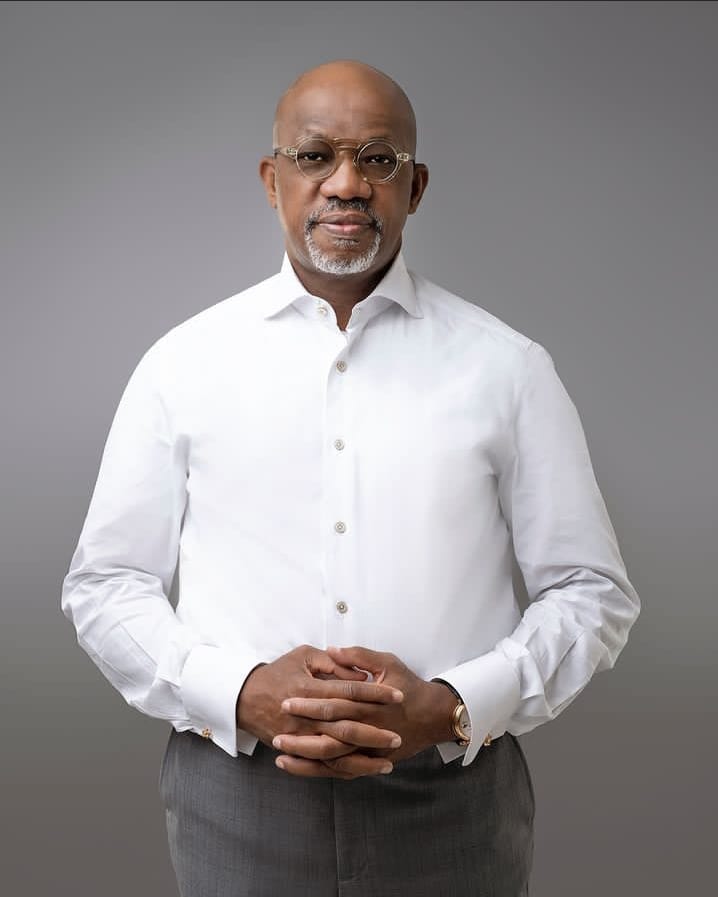
The Quiet Remodelling of Ogun State under Dapo Abiodun
By Kayode Akinmade
History is rarely generous to leaders who inherit complexity. It demands instant miracles while overlooking structural deficits accumulated over time. Yet, every so often, leadership emerges that understands transformation not as spectacle, but as process—steady, deliberate and enduring. Over the past six years, Ogun State has experienced such leadership under Governor Prince Dapo Abiodun.
When Abiodun assumed office, Ogun was widely regarded as a state of enormous promise weighed down by contradictions. Its proximity to Lagos made it attractive to industries, yet infrastructure lagged behind growth. Its people were industrious, but opportunities were unevenly distributed. The state bore the pressures of urban spillover without enjoying commensurate benefits. What the new administration brought to this reality was not noise, but order; not populism, but planning.
That approach has since reshaped Ogun’s development trajectory.
Governance with Direction
From inception, the Abiodun administration anchored governance on a clearly articulated development framework—the ISEYA agenda—focused on infrastructure, social development, education, youth empowerment and agriculture. Rather than a slogan, it served as a coordinating tool for public policy, guiding ministries and agencies toward shared outcomes.
This clarity of purpose reduced fragmentation and promoted institutional coherence. Projects were selected and sequenced based on long-term impact rather than short-term visibility, producing a governance style defined by direction rather than drama.
Infrastructure as an Economic Enabler
Infrastructure has become the most visible expression of this philosophy. Across Abeokuta, Ota, Sagamu, Ijebu-Ode, Ilaro and numerous rural communities, long-neglected road networks have been rehabilitated. Strategic corridors such as the Sagamu–Interchange–Abeokuta route and the Atan–Lusada–Agbara axis have restored mobility and reconnected economic zones.
These roads are not symbolic achievements. They function as economic arteries—reducing travel time, lowering transport costs, reconnecting farmers to markets, and enabling industries to operate more efficiently. In practical terms, infrastructure under Abiodun has translated into productivity, access and dignity for citizens.
Strategic Infrastructure: Taking Ogun to the Skies
The Gateway International Airport at Iperu stands as one of the administration’s most strategic interventions. Conceived as a logistics and export hub rather than a prestige project, the facility aligns with Ogun’s agricultural and industrial strengths.
By integrating air cargo infrastructure with road and planned rail connectivity, the administration positioned Ogun as a gateway for goods moving between farms, factories, ports and international markets. The project reflects a sophisticated understanding of supply chains, export competitiveness and regional economic integration—an approach rarely applied at subnational level in Nigeria.
Rebuilding Investor Confidence
Alongside physical infrastructure, institutional reforms have helped restore investor confidence. Through sustained private-sector engagement, regulatory clarity and strengthened investment facilitation mechanisms, Ogun has reasserted itself as one of Nigeria’s most investment-friendly states.
Industrial hubs in Agbara, Ota, Sagamu and Abeokuta have witnessed renewed activity, supported by improved access roads and responsive government institutions. Ongoing engagement around the Olokola Free Trade Zone and inland logistics infrastructure further demonstrates a development outlook rooted in regional collaboration and long-term positioning.
Human Capital: Education and Healthcare
Education reforms under the administration have focused on access, quality and sustainability. Over 1,000 blocks of classrooms have been built or renovated across all 236 wards, complemented by the supply of more than 50,000 desks and chairs. Digital learning initiatives, including the OgunDIGI Class launched during the COVID-19 pandemic, helped sustain learning continuity.
Teacher recruitment and welfare received renewed attention, with over 4,000 teachers employed through various initiatives, improved allowances, cleared promotion backlogs and the abolition of illegal school levies to ensure free and accessible basic education. The administration also secured outstanding UBEC intervention funds dating back to 2014–2019, earning national commendations from parent and student bodies.
Healthcare interventions prioritised access and functionality. Primary healthcare centres were renovated and equipped, the Ogun State Health Insurance Scheme expanded coverage and reduced out-of-pocket costs, and key tertiary health facilities were upgraded. These included the accreditation of schools of nursing, the inauguration of a Sexual Assault Referral Centre, and the completion and concessioning of the 250-bed Medical Centre of Excellence in Abeokuta.
Repositioning Agriculture
Agriculture has been repositioned from subsistence to enterprise. Through mechanisation support, farmer data systems, revitalised farm settlements and improved rural access roads, the administration strengthened productivity and market access.
Initiatives such as a 20,000-hectare rice project in Yewa, pilot schemes yielding measurable outputs, youth-focused agribusiness programmes, and the Ijebu Development Initiative for Poverty Reduction (Eriwe) reflect an integrated approach. The alignment of agriculture with logistics infrastructure—particularly the agro-cargo airport—signals a value-chain mindset geared toward food security and export growth.
Youth Empowerment and Social Stability
Youth empowerment initiatives have emphasised skills, employability and innovation rather than token interventions. Job centres, vocational programmes, digital platforms and technology hubs have expanded pathways for sustainable livelihoods.
Equally significant has been the tone of governance. Regular consultations, engagement with traditional institutions, fiscal discipline and collaborative security arrangements have sustained Ogun’s reputation for stability—an often underappreciated asset in governance and investment decisions.
A Transformation Rooted in Permanence
Ogun State’s transformation under Dapo Abiodun is neither accidental nor exaggerated. It is evident in infrastructure that endures, institutions that function and policies that align with social and economic realities. While challenges remain, the direction is clear and the momentum sustained.
What has unfolded over six years is governance that values groundwork over grandstanding, systems over slogans, and permanence over applause. In redefining leadership with calm authority and strategic intent, Dapo Abiodun has not merely governed Ogun State—he has restored its confidence, reclaimed its relevance and repositioned it for a future that now feels attainable.