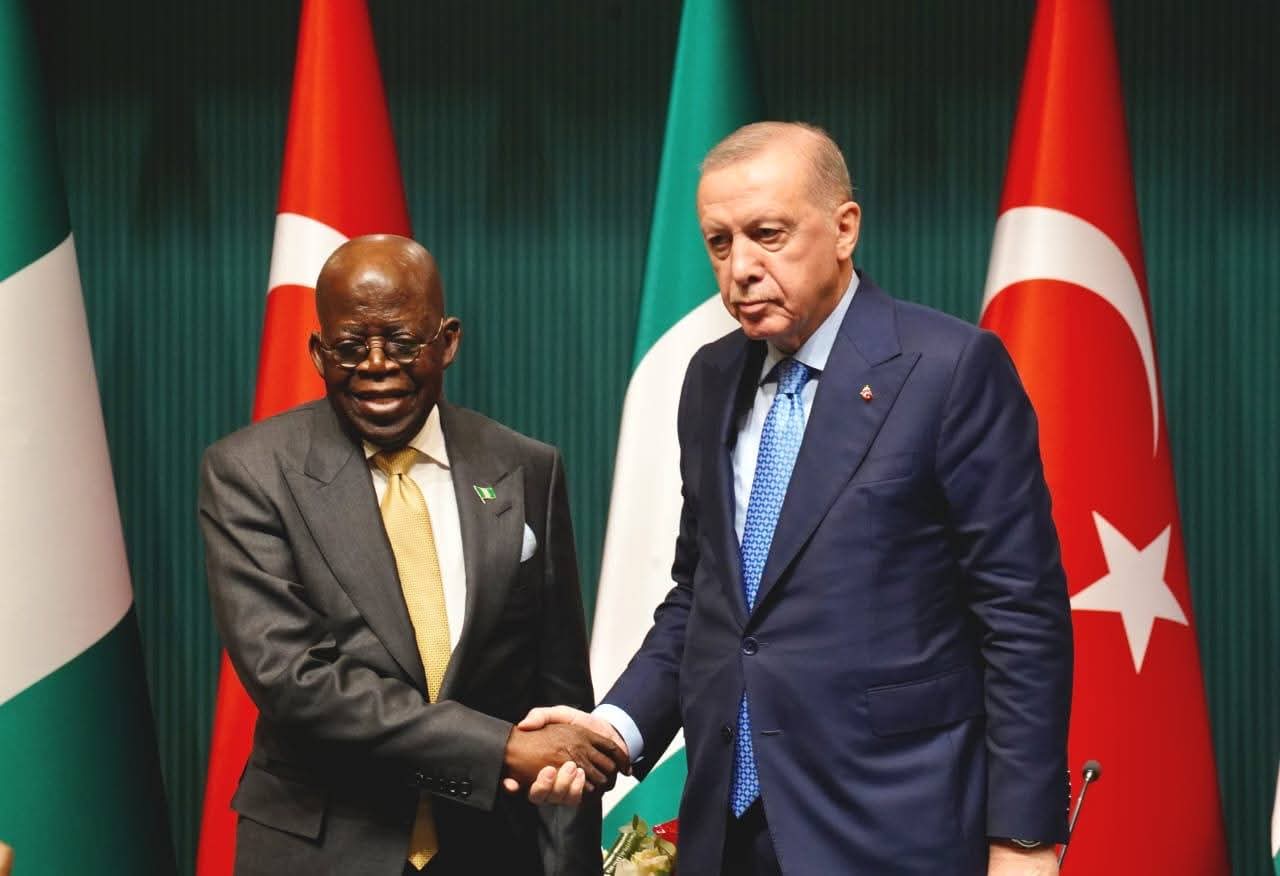
Tinubu’s Türkiye trip secured $5bn trade pathways, strategic deals — Presidency
The Presidency on Thursday said President Bola Tinubu’s recent working visit to Ankara, Türkiye, was driven by concrete economic and diplomatic objectives, noting that the engagement yielded commitments capable of boosting bilateral trade between both countries to $5 billion while deepening cooperation across key strategic sectors.
Special Assistant to the President on Social Media, Dada Olusegun, disclosed this in a post on his X handle while reviewing the outcomes of the visit. He said that while domestic attention briefly focused on a minor ceremonial misstep during a guard inspection, the substantive value of the trip lay in high-level negotiations that culminated in the signing of nine Memoranda of Understanding (MoUs).
According to Olusegun, the agreements span defence, education, diplomacy, media and economic cooperation, underscoring the visit’s alignment with the Tinubu administration’s Renewed Hope Agenda, which prioritises economic diversification, security reform and foreign direct investment.
He explained that the trip was conceived as a strategic working visit rather than a symbolic engagement, adding that Turkish officials and media largely focused on the activation of the Joint Economic and Trade Committee (JETCO), a bilateral framework designed to institutionalise trade and investment flows between both countries.
Describing JETCO as one of the most significant outcomes of the visit, Olusegun said the mechanism would provide long-term benefits for Nigerian exporters and investors by creating structured pathways for market access and industrial collaboration.
The Presidency further noted that Türkiye remains a critical partner for Nigeria in defence manufacturing, infrastructure development and industrial expansion—sectors considered central to the country’s ongoing economic and security reforms.
Other agreements reached in Ankara, it added, cover military cooperation, export facilitation through halal quality infrastructure, academic and diplomatic training exchanges, diaspora engagement, media collaboration and coordination in social services.
“These frameworks represent structured cooperation, not ceremonial declarations,” Olusegun said, stressing that implementation would progress alongside ongoing domestic reforms in the energy and investment policy sectors.
He urged the public to focus on measurable outcomes rather than fleeting optics, arguing that the true value of international engagements lies in the economic, institutional and strategic gains they deliver.
Reaffirming the administration’s commitment to sustained economic diplomacy, the Presidency said the Türkiye visit reflects President Tinubu’s emphasis on long-term national advancement and trade expansion, adding that the projected rise in bilateral trade signals renewed confidence in Nigeria’s global economic positioning.