Opinion
Femi Gbajabiamila and the price of loyalty to his boss.


Published
4 months agoon
By
Admin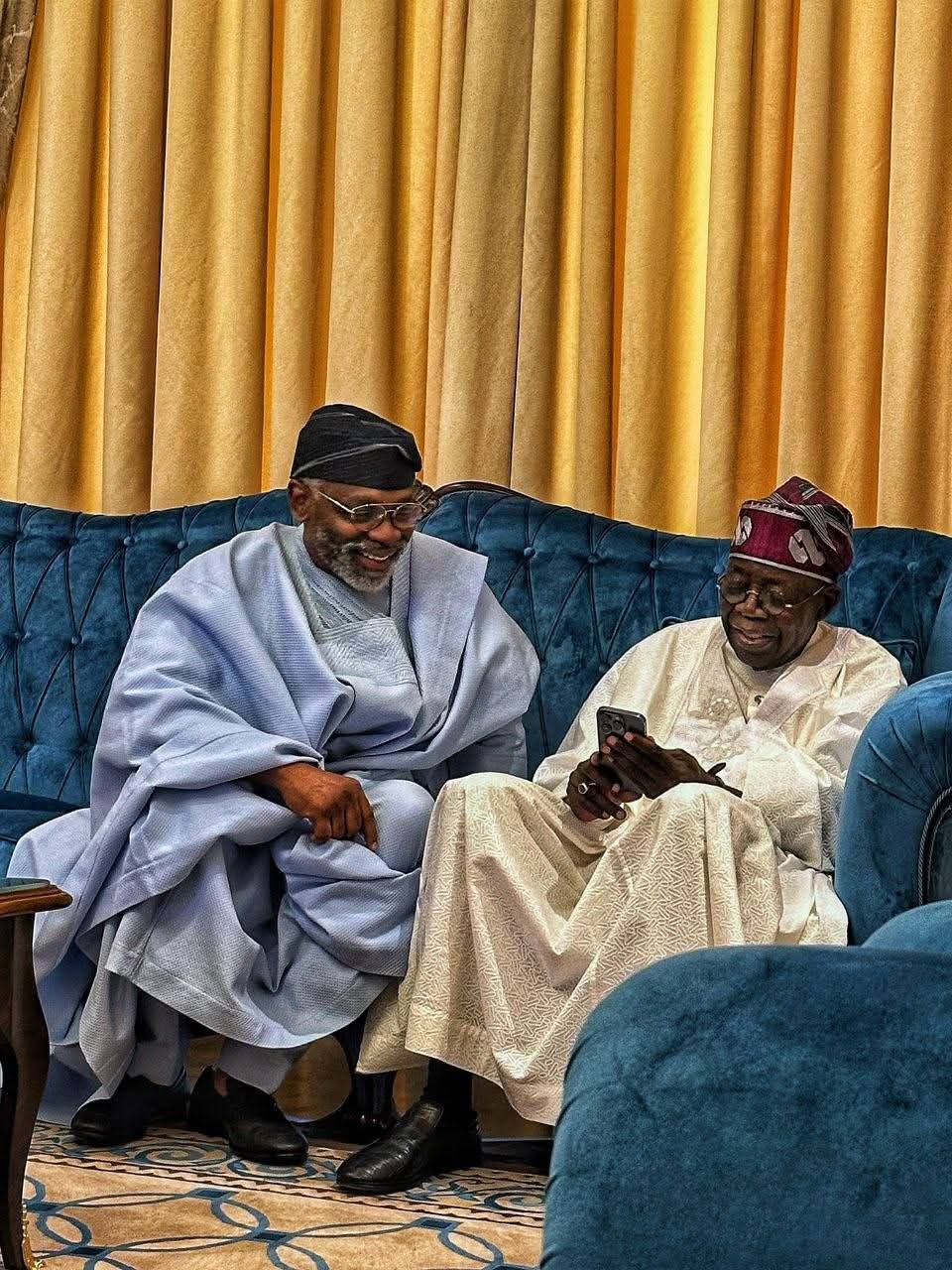
Femi Gbajabiamila and the price of loyalty to his boss.
Politics has never been kind to those who occupy the corridors of power. The closer a public official is to the seat of authority, the greater the scrutiny they face. As the Yoruba adage says, “Ó pẹ́ láyé, ojú rẹ̀ ò ní rí ibi; ìkan ni wà, fi ọwọ́ mú,” suggesting that one must choose between a short life without adversity or a long life that inevitably brings trials.
Few understand this reality better than Femi Gbajabiamila, whose journey from personal tragedy to becoming one of Nigeria’s most influential political figures has been defined by resilience, ambition, and constant public scrutiny.
Gbajabiamila’s story did not begin from a place of privilege. At the age of nine, he lost his father, Chief Magistrate Abdulateef Gbajabiamila, who was among the founding members of the Ansar-Ud-Deen Society of Nigeria. He was thereafter raised by his mother, Dr. Latifat Folake Gbajabiamila, who, at the age of 41, became solely responsible for raising him and his siblings. Today, at 96 years old, she remains widely recognised as Nigeria’s first female Local Government Chairman.
The loss of his father was a defining moment that shaped his outlook on life and compelled him to mature early. Through determination, education, and hard work, he built a successful legal career before venturing into politics.
Over the years, he steadily climbed the political ladder. After serving multiple terms in the House of Representatives, he was elected Speaker of the House. During his tenure, supporters credited him with strengthening legislative coordination, improving collaboration between the Executive and the National Assembly, and championing major reforms, including the Student Loan Act. Many also recall his role in facilitating negotiations that contributed to resolving prolonged ASUU strikes, attributing this to his credibility and consensus-building ability. Like every public figure, however, his decisions also attracted criticism from political opponents and observers.
His appointment as Chief of Staff to President Bola Ahmed Tinubu placed him in one of the most strategic and demanding offices in government. The Office of the Chief of Staff is often the first to absorb public criticism directed at the Presidency. It is a position that inherits both the President’s allies and his opponents. Loyalty, discretion, sound judgment, and the ability to navigate complex political relationships are indispensable qualities for anyone entrusted with such responsibility.
The office itself is one whose scope is ultimately defined by the President. It demands unquestionable loyalty, integrity, security clearance, and the successful completion of numerous formal and informal assessments before anyone is considered suitable.
President Bola Ahmed Tinubu is Nigeria’s first deeply seasoned career politician to assume the presidency after more than three decades of actively building political structures and alliances. For a leader with such extensive political experience, the individual responsible for managing access to him must possess exceptional judgment and a thorough understanding of the President’s network of friends, allies, associates, and political adversaries.
Many believe Gbajabiamila has met those expectations. Yet today, he finds himself in the headlines—not because of any established finding of wrongdoing—but because he has become the subject of intense public debate.
This raises an important question: why should allegations made by an individual facing serious accusations automatically carry greater weight in the court of public opinion than the decades-long public record of a man who has served in both private and public life? Ultimately, such questions can only be resolved through credible investigations and due process.
In recent weeks, allegations involving Adeyemi Matthew have once again drawn Gbajabiamila into public controversy. Competing narratives have dominated both traditional and social media. Supporters argue that political interests are using the controversy to weaken his influence, while critics insist that every allegation involving public officials deserves careful scrutiny. As with many political controversies, claims and counterclaims continue to circulate, making it all the more important to rely on verified facts rather than speculation.
One question frequently raised by his supporters is how the same Chief of Staff now facing criticism was reportedly among those who alerted the appropriate authorities to the allegations involving Adeyemi Matthew.
Several questions therefore deserve careful consideration:
– At what point did Nigerians first become aware of the Adeyemi matter?
– Who first brought the issue into the public domain?
– Who reportedly pushed for the investigation and prosecution of the alleged offences?
Supporters of Gbajabiamila contend that the answer to these questions points to the Chief of Staff himself.
If that is indeed the case, they argue, another question naturally follows: if the Chief of Staff had been involved in any wrongdoing, would he have been the one to expose the alleged misconduct? Or would he instead have attempted to suppress the matter?
There is also widespread misunderstanding of how the Presidency functions. Those familiar with government procedures note that the Office of the Chief of Staff does not independently make federal appointments. Rather, it coordinates presidential activities and conveys directives, while appointments are made through established constitutional and administrative processes involving the appropriate authorities, including the Office of the Secretary to the Government of the Federation.
Given this understanding, many of Gbajabiamila’s supporters believe that calls for his resignation are politically motivated rather than based on established evidence.
To many students of Nigerian politics, the Adeyemi controversy represents yet another chapter in longstanding political rivalries. They argue that similar campaigns have emerged in the past and are driven more by political competition than by verified facts.
Supporters also point to recent public appearances at the Presidential Villa, where President Tinubu invited Gbajabiamila to address attendees, as an indication that he continues to enjoy the President’s confidence. While only the President can determine who serves in his administration, many political observers interpret such appearances as evidence of continued trust.
The broader debate also reflects a recurring trend in Nigeria, where public opinion is often shaped as much by emotion and social media narratives as by verified evidence. Recent controversies have demonstrated how quickly public perception can form long before investigations are concluded.
For Gbajabiamila, public scrutiny is unlikely to diminish. His office ensures that virtually every major decision of the administration attracts both praise and criticism. Whether regarded as an effective political strategist or a polarising figure, few would dispute that he remains one of the most influential actors in Nigeria’s contemporary political landscape.
His supporters describe him as a man of honour, dignity, and unwavering loyalty to President Tinubu. They believe the sustained criticism directed at him is intended to distract the administration from its policy agenda. They also maintain that the President is unlikely to be swayed by what they consider politically motivated attacks.
As investigations continue, many have called on the relevant security agencies to conclude their work expeditiously ahead of the court proceedings scheduled for 23 July 2026, so that any judicial process may benefit from a thorough and timely investigation.
Gbajabiamila’s journey—from a young boy who endured personal loss to becoming a lawyer, legislator, Speaker of the House of Representatives, and eventually Chief of Staff—is the product of decades of public service rather than overnight success.
As discussions continue regarding the future of the Tinubu administration, his performance, political influence, and the confidence reposed in him by the President will undoubtedly remain subjects of national debate.
In the end, history rarely judges public servants by the number of controversies that surround them. More often, it remembers the substance of their contributions, the institutions they strengthened, and the legacy they leave behind.
As Nigerians await the proceedings scheduled for 23 July, it is the courts—not public opinion—that will ultimately determine the facts. Until then, restraint, due process, and respect for the rule of law remain essential.
Prince Oladega Ibrahim Kehinde served as Special Adviser on Political Matters (South West) to Rt. Hon. Femi Gbajabiamila during the 9th National Assembly and currently serves as Senior Special Assistant on Political Matters to the Governor of Lagos State, Babajide Sanwo-Olu.

