The Federal Government has said it is prepared to recalibrate economic policies if necessary, as geopolitical tensions in the Middle East continue to intensify, warning that the situation could transmit fresh shocks to Nigeria through energy prices, capital flows, and global supply chains.
“The Federal Government will continue to monitor the situation closely and adjust policy measures where necessary to minimise disruptions, sustain investor confidence, and protect the welfare of Nigerians,” the government said in a statement on Tuesday.
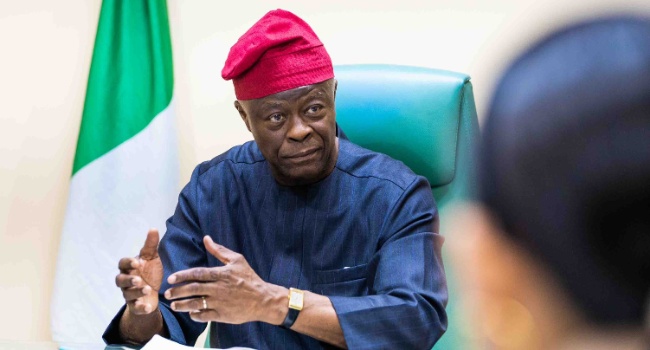
The statement, signed by the Assistant Director of Information and Public Relations at the Federal Ministry of Finance, Mrs Uloma Amadi, said the Economic Management Team, chaired by the Minister of Finance and Coordinating Minister of the Economy, Mr Wale Edun, had begun reviewing the possible economic consequences of the crisis.
According to the ministry, the EMT recently met to assess the potential implications of escalating tensions involving the United States, Israel, and Iran. The minister also chaired a Naira-for-Crude policy coordination meeting where developments in global energy markets and their domestic implications were discussed.
The statement noted that global uncertainty had increased as fears of disruptions to major energy supply routes, particularly the Strait of Hormuz, fuel volatility in crude oil prices and financial markets.
“The Federal Government of Nigeria is closely monitoring escalating geopolitical tensions in the Middle East involving the United States, Israel, and Iran, and remains committed to safeguarding Nigeria’s economic stability,” the statement said.
Officials identified three key channels through which the crisis could affect Nigeria. The first is volatility in crude oil and gas markets, with rising global energy prices translating into higher domestic costs for petroleum products and other energy-related inputs.
“Volatility in global energy markets is already driving increases in domestic prices, including fuel, diesel, cooking gas, and fertiliser,” the statement added.
The second channel involves financial markets and capital flows, with heightened geopolitical risks potentially reducing investment inflows into emerging markets such as Nigeria. The third concerns global logistics and supply chains, where disruptions to major shipping routes or energy corridors could increase freight costs and domestic prices.
Beyond these channels, the government cautioned that prolonged instability could deepen inflationary pressures and increase the cost of living if global commodity prices remain elevated.
“The Honourable Minister noted that beyond these immediate effects, sustained instability could drive increases in the cost of goods and services, placing further upward pressure on inflation and the cost of living,” the statement said.
Ministers across key economic sectors provided updates on how developments in global markets could affect Nigeria’s fiscal and macroeconomic outlook. The extent of the impact, officials said, would largely depend on the duration of the conflict and the degree to which it disrupts global oil supply.
The government said the EMT is closely monitoring macroeconomic indicators, including global crude oil prices, exchange rate movements, capital flow trends, financial market conditions, and potential effects on domestic inflation and fiscal reserves.
Despite the uncertainty, the statement highlighted that Nigeria enters the period of heightened global risk with stronger macroeconomic fundamentals. Real GDP growth in Q4 2025 was 4.07 per cent, one of the strongest quarterly performances in over a decade, reflecting ongoing economic reforms and improved macroeconomic coordination.
The government stressed that careful policy calibration remains central to its response to external shocks, aimed at protecting recent progress in macroeconomic stabilisation, revenue mobilisation, and economic growth.
“The Federal Government assures the public that it remains vigilant and proactive, and will take all necessary steps to preserve Nigeria’s economic stability and sustain its growth trajectory,” the statement added.
The report noted that rising petrol prices to about N1,300 per litre in various parts of Nigeria have already prompted businesses to prepare for higher operational costs, a development economists and the Organised Private Sector warn could fuel inflationary pressures and affect goods and services nationwide.