
News
Girl Child Day: Remi Tinubu distributes 2m packs of sanitary pads, gives 2bn grants for 100,000 learners

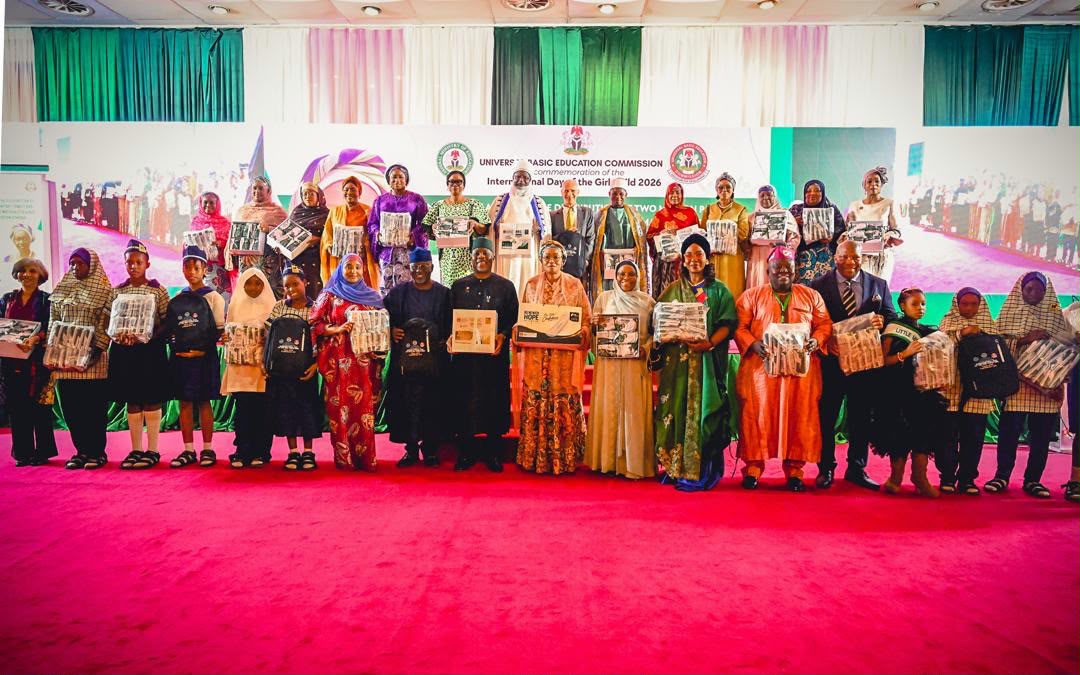
FIRST LADY OLUREMI TINUBU: NO GIRL SHOULD MISS SCHOOL BECAUSE SHE CAN’T AFFORD SANITARY PADS
• Flags off distribution of 2m packs, announces ₦2bn grants for 100,000 learners as she celebrates International Day of the Girl Child
First Lady of Nigeria Senator Oluremi Tinubu has re-stated that no Nigerian girl should be denied the opportunity to learn and fulfil her potential because of menstrual hygiene challenges or her family’s inability to provide basic educational materials.
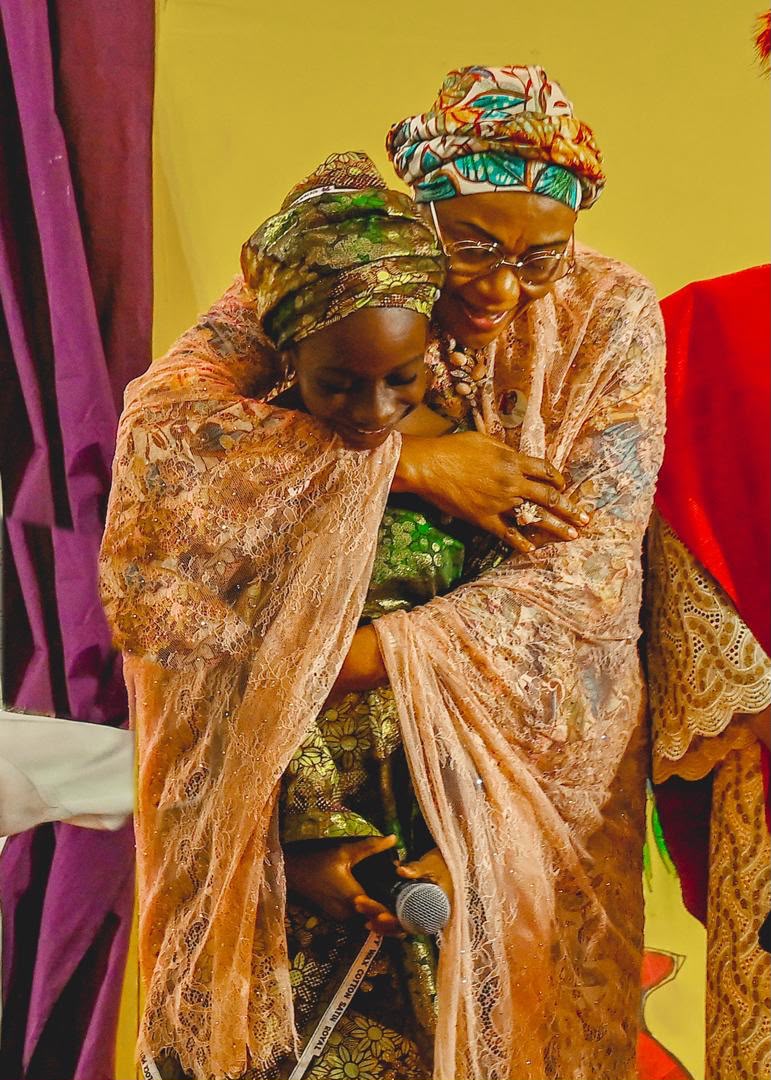
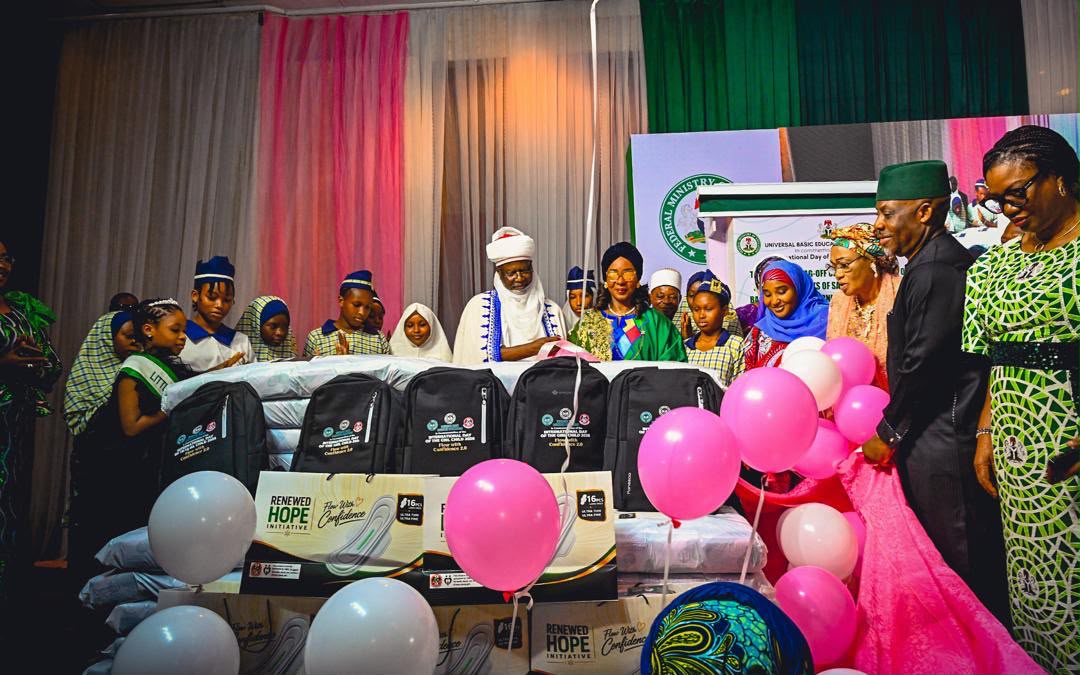
She stated this on Monday when she flagged off the distribution of two million packs of sanitary towels and back-to-school learning materials to girls in public basic education schools across the 36 states and the Federal Capital Territory (FCT).
Senator Oluremi Tinubu who described access to education as essential to national development, said the intervention is aimed at removing barriers that force girls, particularly those in rural communities, to miss school during menstruation.
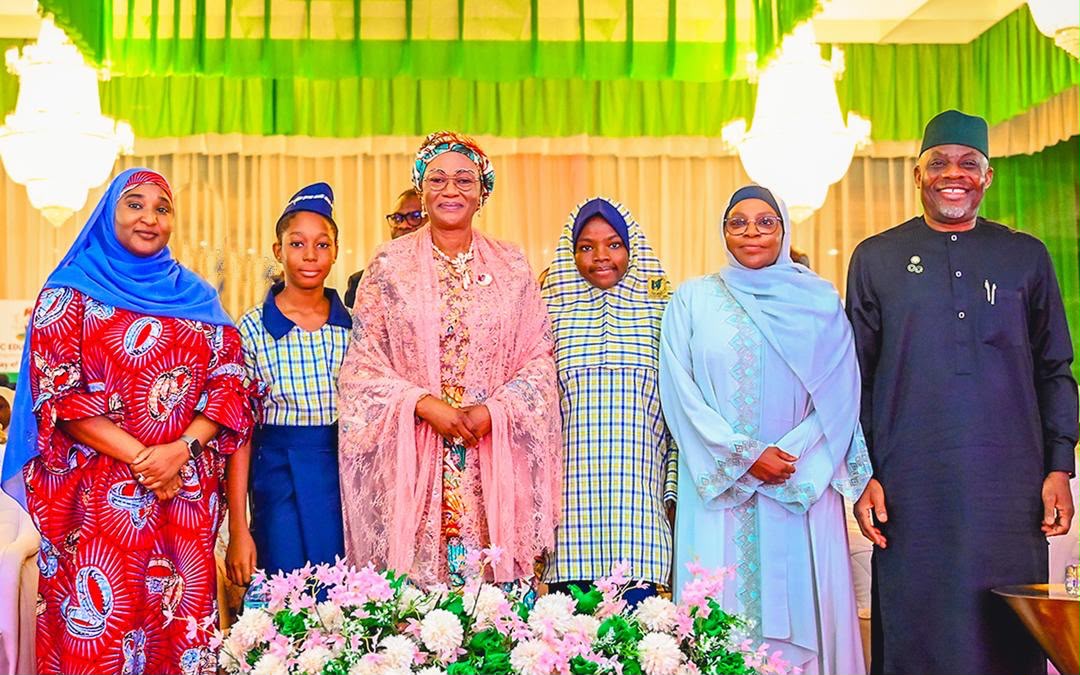
“Keeping our girls in school requires us to recognise and address the challenges that affect their education, especially those in rural communities, who often miss school because they do not have access to sanitary products”.
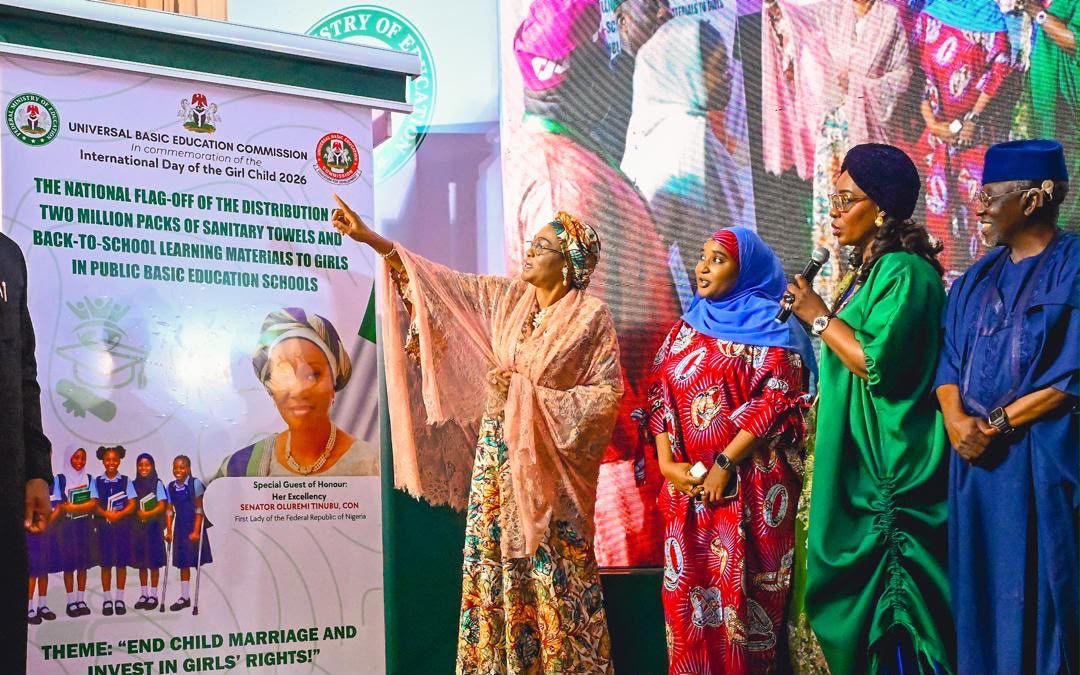
The initiative, Flow with Confidence 2.0, is being implemented by the Universal Basic Education Commission (UBEC) in commemoration of the 2026 International Day of the Girl Child.
The First Lady also announced a ₦2 billion Learners Retention Support Programme targeting 100,000 learners in its first phase, with each beneficiary expected to receive ₦20,000 to help overcome financial barriers to school attendance and retention.
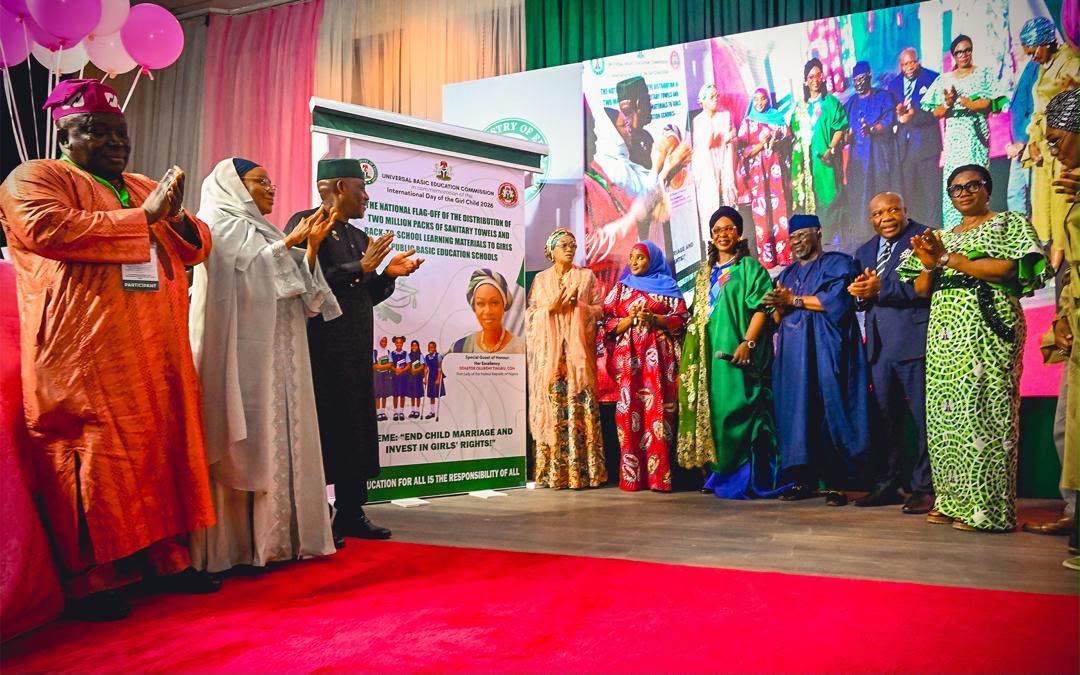
Speaking at the State House Conference, Abuja, Senator Oluremi Tinubu said the programme built on the initial Flow with Confidence initiative launched by her Renewed Hope Initiative on October 2, 2025, which provided a one-year supply of disposable sanitary pads to 370,000 schoolgirls in rural communities nationwide.
She welcomed the decision of the Federal Ministry of Education, through UBEC to take over and expand the programme, saying the distribution of sanitary towels alongside learning materials would help girls return to school with confidence and dignity.
Senator Oluremi Tinubu charged State First Ladies, commissioners for education and chairmen of State Universal Basic Education Boards to ensure that the materials reach the intended beneficiaries transparently and accountably.
She also urged traditional rulers, religious leaders and community stakeholders to challenge the stigma surrounding menstruation and encourage families to support girls’ education.
“To our beloved girls across Nigeria, I encourage you to believe in your dreams, stay in school, work hard, speak up when you need help”.
“I want you to grow into confident and courageous women ready to contribute meaningfully to our nation. Nigeria is counting on you and I believe in you”.
Minister of Education, Dr Tunji Alausa, said the Federal Government is taking steps to ensure that menstrual hygiene support became a sustained component of its basic education interventions.
The Minister said he had pledged to institutionalise the programme through UBEC and the World Bank-supported Adolescent Girls Initiative for Learning and Empowerment (AGILE) when Senator Oluremi Tinubu launched the first phase a year ago.
He disclosed that UBEC would make provisions for sanitary towels in its annual budgets, while AGILE would sustain menstrual hygiene support throughout the life of the project.
“Today, we are translating that pledge into practical action. UBEC will make provision within its annual budgets to support the supply of sanitary towels to girls in public basic education schools”.
The Minister said the initial target of reaching 370,000 adolescent girls under the first phase had been achieved, adding that the latest distribution would extend support to more girls across the country.
Minister of State for Education, Prof. Suwaiba Sa’id Ahmad, said the initiative represented a commitment to protecting the dignity of the girl child and creating a learning environment where menstruation would not interrupt education.
She urged girls not to allow challenges to diminish their aspirations, assuring them that the government was committed to providing the support and opportunities they needed to succeed.
In her address, UBEC Executive Secretary, Aisha Garba, said a girl’s ambitions should not be limited by circumstances that could be addressed through practical interventions.
She illustrated the challenge with the example of a rural schoolgirl who dreams of becoming a teacher, doctor, engineer or lawyer but is unable to attend school because her family cannot afford sanitary towels.
“Sometimes, the key that unlocks that remarkable future is something as simple as a sanitary towel”.
She disclosed that the two million packs would be distributed alongside school bags, school shoes, exercise books, mathematical sets and writing materials to girls in public basic education schools across the states and the FCT.
Aisha Garba also said UBEC had built more than 4,000 classrooms in less than three years, distributed learning materials to over three million pupils and returned more than 700,000 out-of-school children to school.
Chairman of the UBEC Governing Board, Tanko Al-Makura, said the intervention is also important in preventing girls from dropping out of school and becoming vulnerable to early marriage.
He said girls from poor households were often the first to lose access to education when families faced financial difficulties.
“Child marriage and dropping out of school are two sides of the same coin. A girl rarely leaves school on the day she is married. She leaves weeks and months before, one missed day at a time, until there is nothing left to hold her”.
The Sultan of Sokoto, Alhaji Muhammad Sa’ad Abubakar III, represented by the Emir of Argungu, said menstruation must never become a barrier to education.
He urged traditional rulers, religious leaders, parents, teachers and community stakeholders to challenge misconceptions and harmful practices that deny children educational opportunities.
In a goodwill message, Ian Attfield, Education Lead at the British High Commission, said investment in girls’ education has economic and social benefits, noting that each additional year of schooling increased women’s earnings by an average of 12 per cent.
He disclosed that UK-supported programmes had helped more than 1.5 million additional girls access schooling in northern Nigeria since 2012.
Attfield also called for sustained action against child marriage, improved access to education and health services, and stronger safeguards against gender-based violence and abuse.
The ceremony featured a stage play titled Daughters of the Nation, highlighting the history of the Nation and emphasising the role prominent Nigerian women played in nation building.

