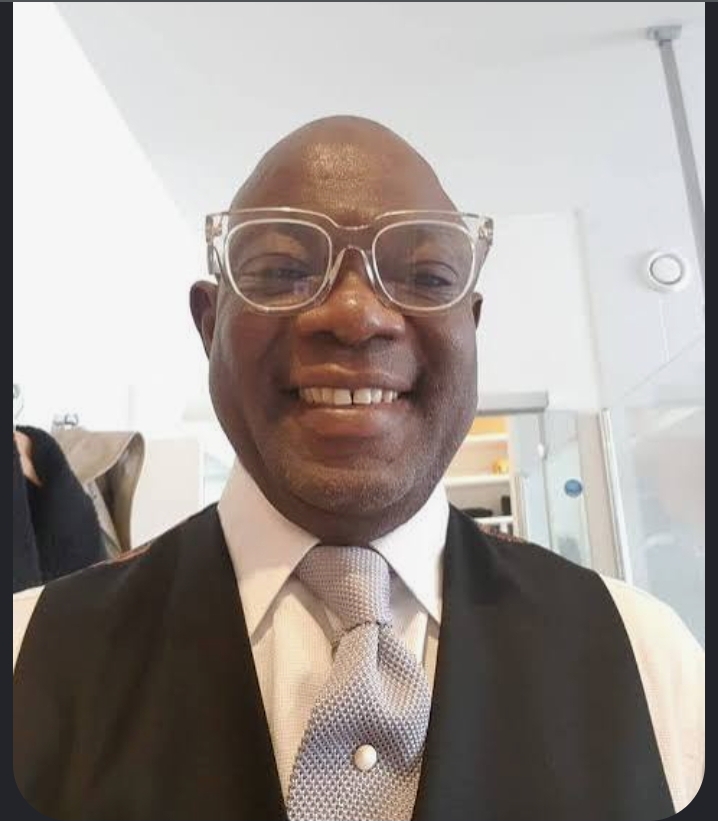
Kunle Bakare: The Boss I Never Worked For, Yet Whose Influence Shaped My Journey –By Dapo Olaniyan
There are people who become your bosses because they employ you, sign your appointment letter and pay your salary. Then there are those who may never employ you, but whose words, opportunities, support and example leave such a lasting impression that you cannot tell the story of your journey without mentioning them.
Mr. Kunle Bakare belongs to the latter category.
I have never worked for him. I was never on his payroll. Yet, when I look back at my journey in journalism and the years I have spent building something of my own, I cannot tell that story without acknowledging his enormous influence on me.
I will always remain indebted to him.
In my recent piece on Barrister Tunji Bamishibin, I mentioned Mr. Bakare and said his story was one for another day.
This is that day.
My first significant engagement with Mr. Kunle Bakare of Encomium Ventures Limited was around 1996. I had gone to negotiate an advertisement for a particular movie which I wanted featured on the cover of his magazine.
I was a young reporter then, a small boy by the standards of the industry, walking into the office of a publisher and chief executive whose position in journalism was considerably above mine.
I had known him from a distance long before then, but this was my first major business interaction with him.
I expected the formal distance that sometimes comes with meeting a man of such stature.
Instead, I encountered warmth.
His professional disposition and gentlemanliness immediately attracted me. He was accessible, respectful and remarkably easy to engage with.
That encounter became the beginning of a relationship that would grow from professional acquaintance into respect, admiration and something much deeper — the affection one develops for a man who genuinely wants you to succeed.
Mr. Bakare eventually became one of my role models in journalism.
There was a time I resigned my appointment as editor of a magazine company where he had once served as the head. At a crossroads, I went to him for advice.
He gave me some vital lessons that have remained with me till today.
That is one thing about Mr. Bakare: he can be simple with his words but deep in thought. A conversation with him can leave you thinking long after you have walked away.
When I started Top News Magazine, I was determined to make an impression.
The first edition carried a political story that generated considerable attention at the time. My brother and friend, Kunle Rasheed, called me while he was on his way to France and told me how the story had become a subject of discussion among some passengers on the flight.
I was excited.
For a new publication, it was a huge encouragement. One of its stories had travelled beyond the newsstand and into a conversation thousands of feet above the ground.
About two weeks later, I visited Mr. Bakare for something I can no longer remember. But I was carrying a copy of the second edition of Top News Magazine.
He went through the magazine, commended the effort and then gave me advice.
It was the kind of professional advice you rarely get freely from someone in the same trade, particularly someone who could simply have congratulated you and moved on.
He wanted me to do better.
I listened carefully and left encouraged. I remember privately thanking God for allowing me to know such a wonderful person.
His influence on my career, however, has gone beyond advice.
At different stages of my professional journey, Mr. Bakare provided opportunities and financial backing that helped keep my business and journalism work moving.
He had no contractual obligation to me. I was not his employee. Yet he was willing to commit his resources to help me get back on my feet and continue the work.
Looking back, I can say without hesitation that no individual has supported my journalism career in those practical ways more than Mr. Bakare.
Sometimes, the difference between giving up and continuing is simply having someone who believes you can still make it.
Mr. Bakare has been that person for me on more than one occasion.
And my experience is not unique.
My friend and colleague, Azuh Arinze, had the privilege of working with Mr. Bakare for almost two decades. In our conversations, Azuh has shared several stories about his former boss and the impact he had on his career and life.
These stories reveal a man who wanted the people around him to progress.
For Mr. Bakare, leadership appears to have always been about more than occupying a position at the top of an organisation.
It is about lifting people.
I remember one of his invitations when he told me, in essence, that in life, a person must take a stand or back out rather than pretend there is a middle ground.
The words were simple, but the lesson was profound.
His counsel has influenced some of my professional decisions and widened my understanding of life, business and the courage required to pursue one’s convictions.
For those who know Mr. KB, there is another side to him that cannot be ignored.
He is simple in many respects, but sophisticated in thought and presentation. He is an A-class power dresser, an Omoluabi to the core.
So perhaps it should not surprise anyone that fashion has become one of his current business interests — a passion he has nurtured and worked to perfect over the years.
Beyond the style and business, he is a devoted family man, blessed with a good woman and two loving children.
There is also something beautiful about the way he acknowledges life’s blessings. At privileged moments, he does not hesitate to use the Arabic expression “Alubarika” — God’s blessings.
Looking at his journey and the number of people whose lives he has touched, I now understand why the word comes naturally to him.
Today is not his birthday.
There is no anniversary prompting this tribute.
It is simply a day for me to pause, look back and acknowledge one of the people who has contributed significantly to my journey.
That person is Kunle Bakare.
I have met people who were powerful, successful, generous and influential. But there is something special about someone who uses his influence to help others rise.
Mr. Bakare has been one of such persons in my journey.
So I can say this without hesitation:
I never worked under Kunle Bakare, yet his influence worked on me.
He never signed my pay cheque, yet he contributed greatly to the story of my success.
He is the boss I never worked for, the mentor I never formally applied to, and an elder brother who was never born into my family.
For the opportunities, the counsel, the support, the interventions and, above all, the belief in me, I remain grateful.
Alubarika, Mr. KB.