
Article
As Tunji-Ojo turns 44, Nigerians can expect more smiles…

Published
6 months agoon
By
Admin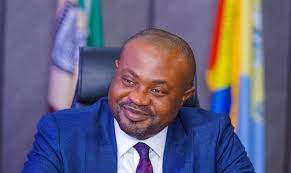
As Tunji-Ojo turns 44, Nigerians can expect more smiles…
By Femi Salako
Media Consultant to Minister of Interior
Let us celebrate the grace and good health that God Almighty has poured upon Hon. (Dr.) Olubunmi Tunji-Ojo as he marks another year of life on May 1. As the scriptures remind us in Psalm 92:14, those rooted in purpose shall bring forth fruit even in their season of flourishing, and in every chapter of this man’s life, that divine promise has been unmistakably fulfilled. The grace upon him is not accidental; it is the fruit of purpose, discipline, and a life consecrated to service. As Nigeria pauses to honour a man who has become one of the defining voices of reform in modern governance, what stands before us is not simply a public official adding another year, but a leader whose imprint on the machinery of the Nigerian state has been both swift and deeply consequential.
This moment is not just about age. It is about impact within time. It is about how one individual has redefined the expectations of leadership in a space long associated with routine and inertia.
From his early years in Oyin Akoko, there were already signs of structure and discipline that would later define his journey. His time at Ansarudeen Primary School laid a strong academic foundation, while his emergence as Senior Prefect at FUTA Staff Secondary School in 1998 revealed a young man already comfortable with responsibility. These early experiences were not isolated achievements but indicators of a deeper orientation toward leadership, the kind that serves rather than performs.
His academic journey reflects a deliberate pursuit of technical depth and intellectual clarity. Beginning at Obafemi Awolowo University and later transitioning to the University of North London where he studied Electronics and Communication Engineering, he graduated with distinction in 2005. By 2006, he had obtained a Master’s degree in Digital Communication and Networking. His academic progression was not merely about credentials but about building a systems-oriented mindset that would later define his approach to governance.
With eighteen professional certifications, including recognition as one of the early certified ethical hackers in the United Kingdom, he developed a strong understanding of vulnerabilities and efficiencies within complex systems. This technical grounding became a defining advantage in his later public service, giving him the rare ability to diagnose institutional failure with precision and engineer lasting solutions.
Before entering politics, he had already established himself as a formidable professional. Becoming Chief Executive Officer of Matrix IT Solutions Limited at the age of 24 was not just a remarkable milestone; it was evidence of early strategic maturity. Over nearly two decades, he consulted for major institutions including the Nigerian National Petroleum Corporation, the World Bank, the Petroleum Technology Development Fund, and the Joint Admissions and Matriculation Board. These engagements exposed him to the inner workings of large bureaucratic systems and gave him firsthand insight into the inefficiencies that often hinder performance.
His transition into the House of Representatives in 2019 marked a new phase of service rather than a departure from impact. Representing Akoko North East and North West Federal Constituency, he approached legislative responsibility with the same analytical rigor that defined his private sector career. During his first term in the Green Chamber, he served as Chairman of the House Committee on the Niger Delta Development Commission (NDDC), where he played a critical role in advancing accountability and reform. His efforts in curbing systemic abuse and promoting youth inclusion in leadership structures earned him recognition and reinforced his credibility as a reform-minded legislator.
It was also during his time in the House of Representatives that his strategic leadership skills came into full display beyond committee work. He was a central figure in the mission and campaign that saw Rt. Hon. Femi Gbajabiamila emerge as Speaker of the House of Representatives, a political effort that demonstrated his capacity for coalition-building, loyalty, and calculated political action at the highest levels of Nigeria’s legislature. That he could navigate the complex terrain of legislative politics with such effectiveness spoke to a leader whose intelligence extended well beyond the technical into the deeply human and relational dimensions of governance.
On 26 February 2023, he was re-elected as the federal lawmaker representing Akoko North East and North West Federal Constituency. However, answering a higher call to national service, he resigned his membership of the lower chamber of the National Assembly after being appointed by President Bola Tinubu as Minister of Interior on 16 August 2023.
That appointment was no coincidence. Hon. Tunji-Ojo has long been a committed student of President Bola Ahmed Tinubu’s political philosophy and school of thought, a philosophy anchored in strategic governance, economic pragmatism, and the development of capable institutions. He embodies the ideology that governance must be results-driven and that leaders must combine vision with execution. His rise within the political firmament reflects how deeply he has absorbed and applied the principles of bold, transformational leadership that define the Tinubu school of thought. In many respects, his work as Minister of Interior is a direct expression of that ideology in practice, disciplined, innovative, and relentlessly focused on measurable outcomes.
His appointment as Minister of Interior in 2023 marked a defining turning point, not just in his career, but in the trajectory of the ministry itself. Within a remarkably short period, he redefined the identity of the ministry from a largely ceremonial institution into a dynamic and technology-driven hub of internal governance.
One of his most significant achievements has been the transformation of Nigeria’s passport system. For years, the process had been plagued by delays, inefficiencies, and corruption. Through the introduction of automation and a centralized monitoring system, the process was reengineered to reduce human interference and enforce accountability. Applications could now be tracked in real time, and officers were held to strict timelines. What was once a source of national frustration became a model of reform that attracted international attention, with the United States engaging with and studying aspects of the system.
His approach to correctional reform further demonstrated a rare blend of compassion and strategic thinking. By mobilizing over six hundred million naira from private sector partners to offset fines for inmates held for minor offences, he facilitated the release of more than four thousand individuals. This intervention not only restored freedom to thousands but also reduced the financial burden on government, saving billions annually in inmate upkeep. It is the kind of policy that reflects a leader who sees numbers and sees people simultaneously.
In addressing illegal mining, he introduced the Mining Marshal initiative under the Nigeria Security and Civil Defence Corps in collaboration with the Ministry of Solid Minerals Development. This move reframed security enforcement as an economic protection strategy. The arrest and prosecution of illegal operators signaled a shift toward safeguarding national resources while strengthening revenue generation.
His leadership also extended to strengthening institutional capacity within the Federal Fire Service, where efforts began to transform the fire academy into a regional center of excellence. This initiative reflects a forward-looking vision that prioritizes preparedness and professional training across West Africa.
A strong advocate of private sector collaboration, he facilitated over five hundred million dollars in investment into agencies under his ministry within his first year. This reflects a broader philosophy, deeply aligned with President Tinubu’s economic vision, that governance should enable and attract capital rather than restrict it.
What distinguishes his leadership is the integration of technology, policy, collaboration, and human impact. His reforms are not isolated actions but interconnected strategies designed to produce measurable and lasting outcomes. He leads not by impulse but by design, and not merely by instruction but by inspiration. His teams speak of a minister who is present, who listens, and who holds himself to the same standards he demands of others. This convergence approach explains the speed and effectiveness of the changes witnessed under his watch.
Beyond policy implementation, he has also remained actively engaged in intellectual discourse. Delivering over fifty presentations in workshops, conferences, and seminars within a single year, he has contributed to shaping conversations around governance, technology, security, and national development. This positions him not just as a practitioner of reform, but as a thought leader influencing broader national narratives.
At forty-four, he stands at a point where experience meets momentum. Where many leaders at this stage focus on consolidation, he continues to expand the scope of his influence across sectors and systems. His trajectory suggests a model of leadership anchored in competence, driven by innovation, and sustained by a clear and abiding sense of purpose.
Beyond the demands of public office, he remains a devoted husband to Mrs. Abimbola Tunji-Ojo and a committed father. This personal grounding provides balance and reinforces the deeply human dimension of his leadership. It is a reminder that behind every great institution builder is a man who first chose to build well at home.
As he marks another year, what emerges is not just a celebration of life, but a reflection on what is possible when technical expertise meets political will, and when a man’s gifts are offered in genuine service to his nation. His journey provides a compelling blueprint for governance that is efficient, accountable, and boldly future-oriented.
In Hon. (Dr.) Olubunmi Tunji-Ojo, Nigeria is not only witnessing leadership in action; it is witnessing the deliberate construction of a new standard. And by God’s grace, the best is yet to come.

